
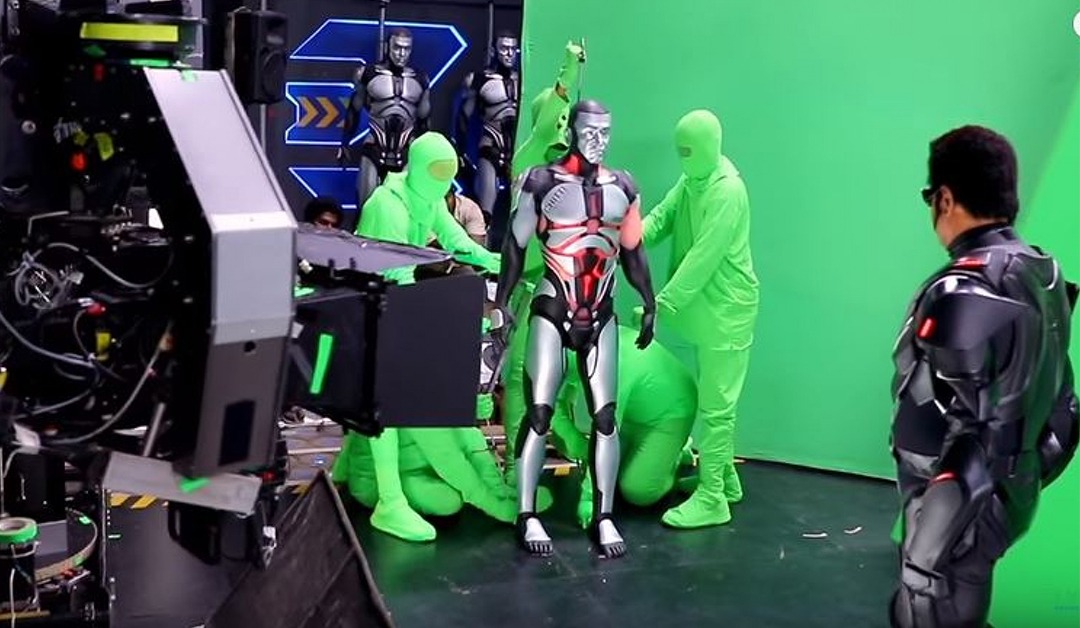
VFX (visual effects) is a good career in India for people who like solving visual problems and want to work on films, OTT series and advertising. Indian studios work on major international films and shows as well as Indian productions, and the work needs a wide range of skills, from rotoscoping and tracking to compositing and simulation.
What VFX artists do
- Rotoscoping and paint: separating actors and objects from backgrounds, and removing wires, rigs and unwanted objects.
- Matchmove and tracking: recreating the real camera’s movement so digital elements sit correctly in a shot.
- Compositing: combining live footage, CG and effects into a final, believable image.
- FX and simulation: fire, smoke, water, destruction and particles.
- Matte painting and environments: building digital backgrounds and set extensions.
Most people start in rotoscoping, paint or compositing and specialise as they gain experience.
The industry in 2026
India’s media and entertainment sector grew 9% to ₹2.78 lakh crore in 2025 and is expected to reach ₹3.3 lakh crore by 2028, according to the FICCI-EY media and entertainment report (March 2026). Digital media is now the largest part of the industry. Animation and VFX had a difficult 2024, when revenue fell 9% after the Hollywood strikes reduced work outsourced to India, and grew only 2% in 2025. The same report expects animation and VFX to be among the main growth drivers through 2028.
In plain terms: the opportunity is real and growing, but studios hire people with strong portfolios and up-to-date skills, including AI tools. A certificate alone is not enough.
How AI is changing VFX
AI tools are making rotoscoping, clean-up, upscaling and set extensions much faster. For example, After Effects Roto Brush can separate a person from the background in minutes. This removes some of the most repetitive entry-level work, so new artists need to arrive with stronger compositing and problem-solving skills and know how to use these tools. Realistic integration, matching light and grain, and fixing what AI gets wrong still need trained VFX artists.
What you can earn
Entry-level VFX artists at Indian studios commonly start at around ₹1.5–3 lakh a year. With experience, artists at larger studios can reach ₹5–8 lakh or more; compositing leads, FX artists and supervisors earn significantly more. Mumbai, Hyderabad, Bengaluru, Chennai and Pune have the largest VFX employers.
Salary figures are indicative ranges from self-reported data on sites such as AmbitionBox (checked October 2026). Actual pay depends on your city, the studio, your portfolio and your specialisation.
Is VFX right for you?
VFX suits you if you enjoy detail, like understanding how images work, and are comfortable with deadlines and feedback. It is less about drawing and more about observation, technique and patience. If you prefer creating characters and stories, look at 3D animation as well.
A typical career path
Most VFX artists start in rotoscoping, paint or matchmove, where they learn how shots are built and how studios work. Within one to three years many move into compositing or FX, and with experience into lead, supervisor or pipeline roles. Some move to advertising, music videos or independent film, where generalists who can shoot, edit and composite are valued.
Common questions
Do I need a science or maths background for VFX?
No. A good eye, patience and comfort with software matter most. For advanced FX and simulation, some interest in physics and scripting helps, and you can learn it along the way.
Which software do VFX studios use?
Nuke for compositing, Maya and Houdini for 3D and FX, After Effects for motion graphics and smaller projects, and Silhouette and Mocha for roto and tracking. Learning After Effects first is a practical start.
Can I freelance in VFX?
Yes, especially in advertising, music videos and YouTube, where clients need compositing, clean-up and motion graphics. Studio experience first makes freelancing much easier.
How to get started
- Learn the fundamentals properly: drawing or design basics, storytelling and the core software.
- Add AI to your workflow for ideas, clean-up and speed, so you can deliver more without losing quality. Read what AI changes, and what it doesn’t.
- Build a portfolio or showreel of 4–6 strong pieces rather than many average ones.
- Get real experience through live projects, internships or freelance work.
- Apply with your work, not just your certificate. Our Placement Cell helps every student find openings and prepare for interviews.
Courses at Pepper Animation
- VFX Pro course (16 months)
- Advanced Diploma in Animation and VFX Prime (1 year)
- Certificate in Video Editing and VFX (6 months)
- Adobe After Effects training
- AI Filmmaking and Video Generation (3 months)
Not sure which path suits you? Book a free demo class at our Rohini centre or online and talk to our faculty.