
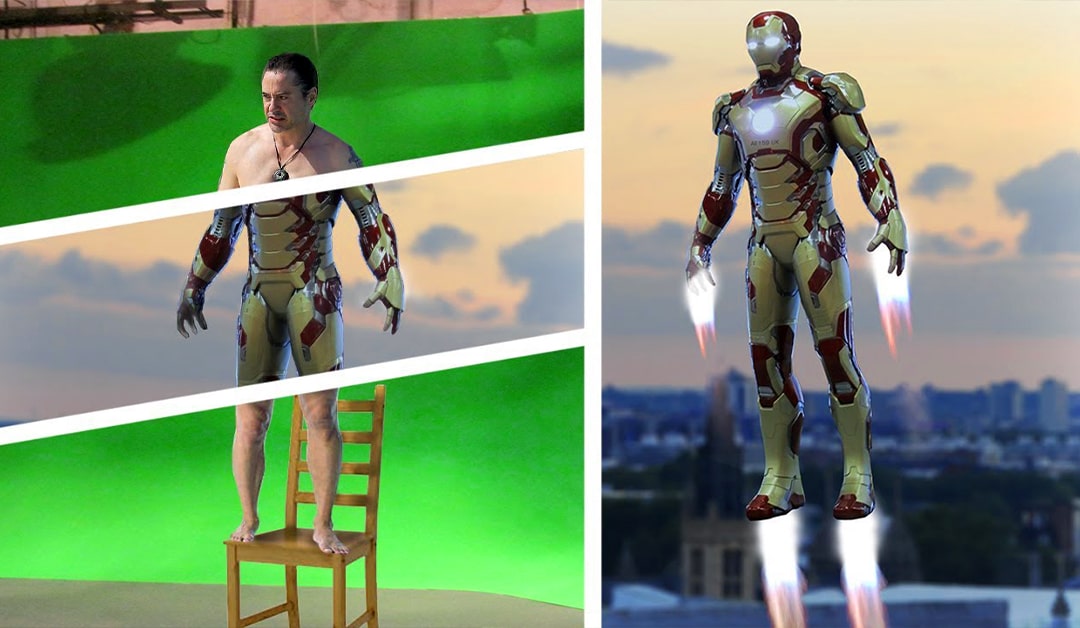
Students often come to us undecided between VFX, animation and graphic design. They are all creative and visual, but the day-to-day work, software and career paths are quite different. This guide compares them side by side so you can choose with confidence.
At a glance
| What you create | You start from | Key software | Typical first jobs | |
|---|---|---|---|---|
| VFX | Changes to real filmed footage | Live-action footage | After Effects, Nuke, Silhouette, Houdini | Roto or paint artist, junior compositor |
| 2D animation | Hand-drawn or digital 2D characters and scenes | A blank canvas | Adobe Animate, Toon Boom, Krita, After Effects | 2D animator, storyboard artist, explainer animator |
| 3D animation | 3D characters, objects and worlds | A blank 3D scene | Maya, Blender, 3ds Max, ZBrush | 3D modeller, texture artist, junior animator |
| Graphic design | Visual communication: logos, branding, posters, social media | A brief from a client | Photoshop, Illustrator, InDesign, Canva | Graphic designer, visualiser, social media designer |
VFX
VFX artists work on footage that has already been filmed. They remove wires and rigs, add digital elements such as crowds, creatures or skylines, and combine everything so the audience believes it was real. The work is precise and technical, and suits people who enjoy observing how light and movement behave. Learn more in VFX vs SFX vs CGI.
Animation: 2D and 3D
Animators create everything from scratch and bring it to life with movement. 2D animation is drawn frame by frame or with digital puppets, and is used in cartoons, explainer videos, advertising and social media. 3D animation builds characters and objects in 3D software, which are then rigged, animated, lit and rendered; it is used in films, series, games, product visualisation and architecture. Animation suits people who love characters, storytelling and acting through movement.
Graphic design
Graphic designers solve communication problems: a brand identity, a poster that grabs attention, a social media campaign, packaging or a magazine layout. The work is mostly still images, though many designers move into motion graphics, animated text and graphics made in After Effects. In film and TV, “graphics” usually means these titles, lower thirds and animated information. Design suits people who enjoy typography, colour, layout and working with clients.
Where they overlap
- Motion graphics sits between graphic design and animation.
- 3D is used in both animation and VFX, so 3D skills open both doors.
- Compositing is used in VFX and in finishing animated shots.
- Many professionals combine skills: a designer who animates, or a 3D artist who composites.
How AI is changing each field
AI helps designers explore ideas and produce variations quickly, helps animators with concept art, backgrounds and lip-sync, and speeds up rotoscoping and clean-up in VFX. In all three, the people in demand are those with strong fundamentals who can direct AI tools and finish the work professionally. Read what AI changes, and what it doesn’t.
How to choose
- You love films and how shots are made, and enjoy technical detail: choose VFX.
- You love characters, cartoons and games, and like drawing or acting: choose 2D or 3D animation.
- You love brands, posters, typography and social media: choose graphic design.
- Still unsure? Start with a broad programme and specialise later.
Courses at Pepper Animation
- Advanced Diploma in Animation and VFX Prime (1 year)
- Diploma in 3D Animation (1 year)
- Certification in 2D Animation (6 months)
- Advanced Diploma in Graphic Designing and Motion Graphics (1 year)
- VFX Pro course (16 months)
Read about careers in VFX and animation or multimedia and design, or book a free demo class and talk it through with our faculty.
Common questions
Is VFX harder than animation?
Neither is easier; they need different strengths. VFX rewards technical precision and observation; animation rewards drawing, timing and acting.
Can a graphic designer move into animation or VFX?
Yes. Motion graphics is a natural next step, and design skills in composition and colour help in both animation and VFX.
Should I learn 2D or 3D animation first?
2D teaches the principles of movement quickly and suits explainer and social media work; 3D is used more in films, games and product visualisation. Many students learn 2D principles first, then specialise in 3D.